East Tennessee History · County by county
Three rivers meet at Kingston. Over two centuries this spot has been a frontier fort, Tennessee’s capital for one day, an iron town, a temperance experiment and a corner of the Secret City.
Roane County sits where the Clinch and Emory rivers run into the Tennessee. [S33] That spot made it a frontier crossroads. A federal fort stood above the rivers in the 1790s, and for one day in 1807 the town beside it, Kingston, was the capital of Tennessee. [S60][S69] After the Civil War, Northern investors built an iron town at Rockwood and a no-liquor model city at Harriman. [S33][S73] In the 1940s the county gave up land for the Manhattan Project, and the giant K-25 plant rose on its side of the Clinch. [S23][S82] Today TVA’s Watts Bar Lake wraps around much of the county. [S33][S78]
The first military post here was a blockhouse put up about 1792, half a mile up the Clinch from where the fort stands now. It sat on the line a 1791 treaty drew between U.S. territory and the Cherokee Nation, beside the only road west to the Cumberland settlements around Nashville. [S68][S60] (The state marker on the highway dates it to 1791–92.) [S67] Roane County’s encyclopedia history credits John Sevier with setting up the post to guard settlers heading west. [S33]
Things changed after Tennessee became a state in 1796. Congress passed a law to regulate trade with the tribes and keep the peace, and the government sent more federal troops to East Tennessee. [S68] In 1797 soldiers built a larger fort on the high knoll where the Clinch meets the Tennessee. [S60][S66] At its peak, more than six hundred soldiers served there. [S68] Their job flipped: instead of mainly escorting settlers, the troops now had to keep settlers off Cherokee land and remove those who had moved onto it illegally. [S68][S33]
From 1801 to 1807, the fort was home to the federal Cherokee Agency under Col. Return Jonathan Meigs, who was also the military agent for U.S. troops in Tennessee. [S60][S62] In 1807 the agency moved farther south to the new Hiwassee Garrison. [S60][S62] The fort kept working as a supply depot for a few more years and was shut down in 1811. [S60][S66]
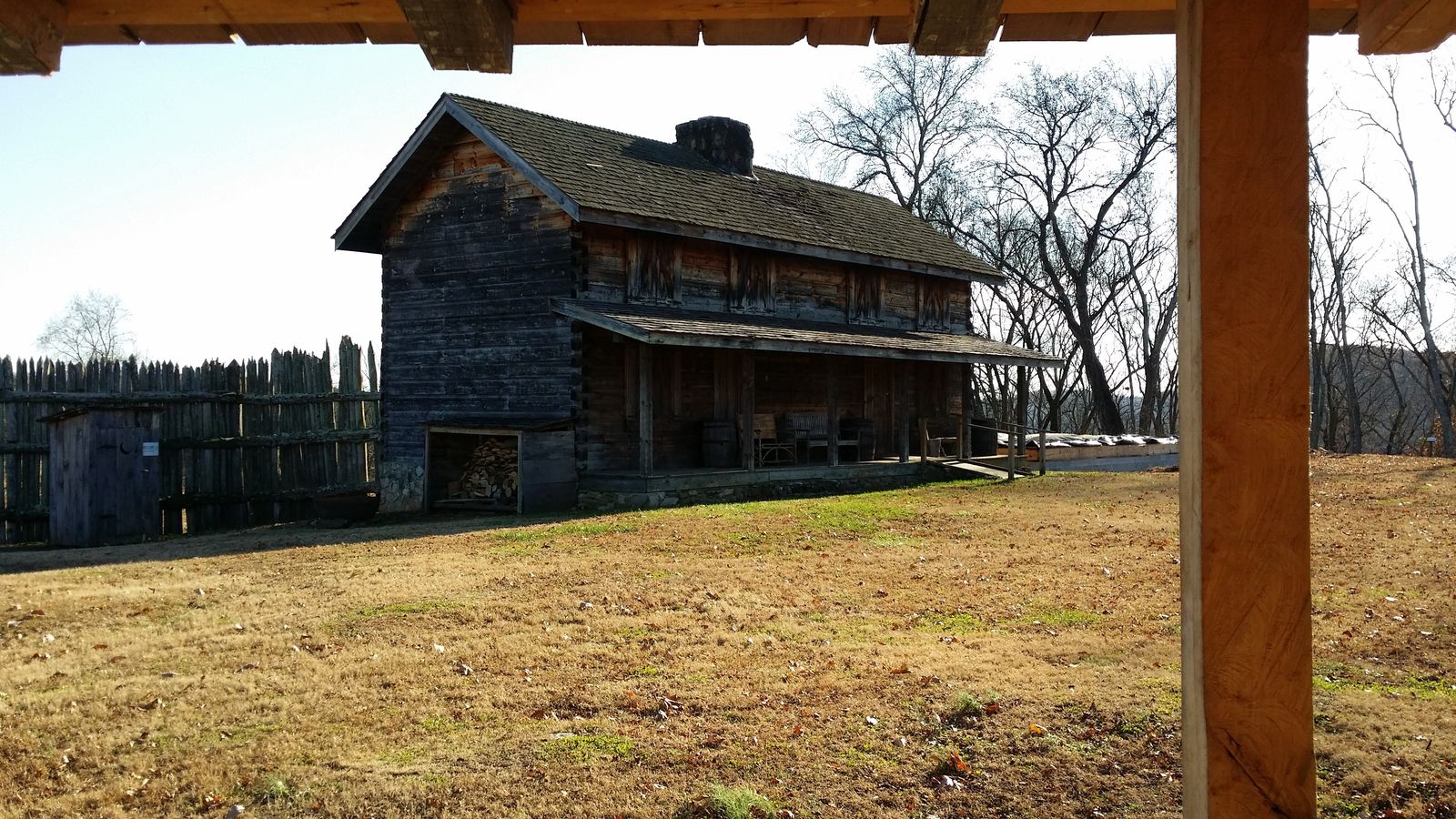
The site went on the National Register of Historic Places in 1972, and the City of Kingston opened it as a historic park two years later. [S66] Archaeologists dug there for several seasons, and their finds guided the rebuilding of log buildings and part of the palisade on the old foundations. [S60][S66] The reconstruction was dedicated in 1996, a goal of longtime county historian J. C. Parker, who did not live to see it finished. [S33] Today it is Fort Southwest Point State Historic Park. [S66]
The legislature created Roane County in 1801 from part of Knox County and land still claimed by the Cherokee. [S38] It was named for Archibald Roane, Tennessee’s second governor. [S38][S33] Roane was born in Pennsylvania in 1760, fought in the Revolution, practiced law, and helped write Tennessee’s first constitution in 1796. [S61] In 1801 he won the governorship almost without opposition. [S61] As governor, he had to break a tie for major general of the state militia, and he chose Andrew Jackson over John Sevier. That decision deepened the feud between the two men, and Sevier beat Roane at the next election. [S61] Roane later served as a judge until his death in 1819. [S61][S38]
Kingston, next to the fort, became the county seat. [S33] The county’s land came to the settlers through a string of Cherokee treaties: one in 1794, the Third Treaty of Tellico in 1805, and the 1819 Calhoun Treaty, often called the Hiwassee Purchase. [S33] The early years were violent on both sides. The county’s encyclopedia entry notes raids on settlements by Cherokee leaders Doublehead and Tullentusky, and the outlaw Harpe brothers rode through in the early 1800s. [S33]
Kingston’s most famous day grew out of the 1805 treaty talks. The Cherokee gave up the land around Southwest Point with the understanding that Tennessee would put its capital at Kingston. [S33][S69] In 1806 the General Assembly voted to hold its next meeting "at the town of Kingston near South-West Point." [S70]
So on Monday, September 21, 1807, lawmakers gathered in Kingston. That same day they voted to adjourn and meet in Knoxville two days later. [S69][S70] On paper, the promise to the Cherokee was kept; in practice, the capital stayed in Kingston only a few hours. [S33][S69] Markers near the old courthouse tell the story. [S69][S70]
A young Sam Houston, later governor of Tennessee and president of Texas, clerked in a Kingston store for a while before he joined the army in the War of 1812. [S33]
Roane’s old courthouse was finished in 1856 and is one of only a handful of courthouses in Tennessee that date from before the Civil War. [S71] On June 7, 1861, Andrew Johnson stood on its steps and spoke against secession. The next day Roane County voters rejected leaving the Union, 1,568 to 454, though the state as a whole voted to secede. [S71]
Kingston mattered to both armies because it sat near the meeting of the rivers and on the roads from Knoxville to Nashville. Each side held the town at different times. No major battle was fought here, but scouting, skirmishes and foraging were common across the county. [S71] Soldiers used the courthouse as a headquarters and a hospital, and Union signalmen watched the roads and rivers from its cupola. [S71] The county’s encyclopedia entry also remembers Mary Love, a sixteen-year-old who carried a message for the Union through Confederate lines to Knoxville. [S33]
Union Col. John T. Wilder, an Indiana foundry owner who led the "Lightning Brigade," passed through the area during the war and took note of its iron ore and coal. [S33][S63] After the war he came back. With partners including Hiram Chamberlain, he organized the Roane iron works and started the company town of Rockwood. [S63][S72] Sources date the start to 1867 or 1868. [S63][S72][S33] The furnaces made pig iron, which the company shipped out by steamboat at first and later by rail. [S33] Wilder went on to be mayor of Chattanooga and a leader of the industrial New South. [S63]
During the Civil War, a New Hampshire regiment under Col. Walter Harriman camped for several days on the Emory River near the spot where Harriman stands today. [S64] Decades later, a group of prohibitionists led by Union Gen. Clinton B. Fisk, the Prohibition Party’s 1888 presidential candidate, formed the East Tennessee Land Company in 1889. [S73][S74] They planned an industrial city where workers would live free of saloons. [S73][S74] The directors thought about calling it "Fiskville," but they named it for the old colonel instead. His son, Walter C. Harriman, became the company’s managing director. [S64]
The company opened the town with a big public auction of lots on February 26, 1890. [S75] Buyers came from all over the country, and in about the first ten hours they bought 573 lots for more than $600,000. [S33] Every deed and lease the company wrote banned making, storing or selling liquor on the property. [S75][S33] Harriman incorporated in 1891 and became known as the "Utopia of Temperance." [S73][S33] The company’s turreted brick office building later housed the American Temperance University from 1893 to 1909 and then served for decades as city hall. It is on the National Register of Historic Places. [S74][S73]
Harriman’s mills had a harder chapter in the Great Depression. In July 1933, workers at the Harriman Hosiery Mills, most of them women, formed a union under the new federal recovery law. They voted to strike that October. By March 1934 the strike was lost, and it ended that July on the company’s terms. [S65]
Oliver Springs, where Roane, Anderson and Morgan counties meet, was a busy mineral-springs resort in the late 1800s. [S33][S32] Richard Oliver, the town’s first postmaster, built a four-story hotel with close to two hundred rooms and a tall tower, with bridle paths up Walden Ridge. It burned in 1905 and was never rebuilt. [S33] The town also figured in the Coal Creek War of 1891, when miners raided a mine at Oliver Springs. [S17] (Read more in our Anderson County history and Morgan County history.)
Sam Rayburn, the longtime Speaker of the U.S. House, was born near Kingston, close to the Clinch River, on January 6, 1882. His family moved to a farm in Fannin County, Texas, in 1887. [S76][S77][S33]
TVA started Watts Bar Dam downstream on the Tennessee in 1939 and finished it in January 1942, three weeks after Pearl Harbor. [S78] The lake it made reaches far up the Tennessee, and it keeps a channel deep enough for barges more than 20 miles up the Clinch and 12 miles up the Emory. [S78]
When the Army built the Manhattan Project’s Clinton Engineer Works in 1942, Roane County lost about an eighth of its land to the reservation. [S23] (Read the full Secret City story in our Anderson County history.) Work on the K-25 gaseous diffusion plant, the westernmost of the Oak Ridge plants, began in 1943 on the Roane County side, inside what is now the city of Oak Ridge. [S82] K-25 enriched uranium for weapons and later for reactor fuel. Weapons production there ended in 1964, uranium enrichment stopped in the 1980s, and in 1997 the site was renamed the East Tennessee Technology Park. [S82] Today the K-25 History Center tells the story of the people who worked there. [S56]
TVA built the Kingston Fossil Plant on the Clinch near Kingston to meet Oak Ridge’s growing need for power in the early 1950s. Construction began on April 30, 1951. When the plant was finished in 1955, it was the largest coal-burning power plant in the world, a title it held for more than a decade. [S79][S81]
On December 22, 2008, a dike holding coal ash at the plant failed. About 5.4 million cubic yards of ash poured into the Emory and Clinch rivers and spread over roughly three hundred acres. Three homes were destroyed, and nearby residents had to evacuate. [S80][S81] Under a 2009 order from the U.S. Environmental Protection Agency, TVA dredged the river and capped the remaining ash. [S81] TVA says the cleanup was finished in 2015. [S79] Part of the old spill area is now the county’s Swan Pond Recreation Area and Lakeshore Park. [S81]
In 1934 Kingston built its first public elementary school building for Black children, the two-room Kingston Colored School, for grades one through eight. It was renamed Greenwood School in 1963. After the Civil Rights Act of 1964, the Roane County Board of Education voted that August to desegregate its schools, and Greenwood closed the next year. A state historical marker went up at the site in 2024. [S83]
| Year | What happened |
|---|---|
| c. 1792 | Blockhouse built on the Clinch near the Cherokee treaty line [S67][S68] |
| 1797 | Federal troops build Fort Southwest Point on the knoll above the rivers [S60][S66] |
| 1801 | Roane County created, named for Gov. Archibald Roane; Kingston is the seat [S38][S33] |
| 1801–1807 | Cherokee Agency at the fort under Return J. Meigs [S60][S62] |
| 1807 | Kingston is Tennessee’s capital for a day, Sept. 21 [S69][S70] |
| 1811 | Fort Southwest Point closed [S66] |
| 1856 | Roane County Courthouse finished in Kingston [S71] |
| 1861 | Andrew Johnson speaks at the courthouse, June 7; county votes against secession [S71] |
| 1867–68 | Roane iron works and the town of Rockwood begin [S33][S63][S72] |
| 1882 | Sam Rayburn born near Kingston, Jan. 6 [S76][S77] |
| 1890 | Harriman opens with its land sale, Feb. 26 [S75] |
| 1891 | Harriman incorporates [S73] |
| 1905 | Oliver Springs resort hotel burns [S33] |
| 1933–34 | Harriman Hosiery Mills strike [S65] |
| 1942 | Watts Bar Dam finished; Manhattan Project takes Roane land [S78][S23] |
| 1943 | Work begins on the K-25 plant [S82] |
| 1955 | Kingston Fossil Plant finished [S79] |
| 1964 | Roane County schools vote to desegregate [S83] |
| 1974 | Fort Southwest Point opens as a public park [S66] |
| 2008 | Kingston coal ash spill, Dec. 22 [S80][S81] |
Start in Kingston at Fort Southwest Point State Historic Park and walk the rebuilt fort above the meeting of the rivers. Drive into town to the old Roane County Courthouse and the "Capitol for a Day" markers nearby. Head north to Harriman to see the old East Tennessee Land Company building on Roane Street, the town’s former city hall. Swing west to Rockwood, the iron town, or east to the K-25 History Center in Oak Ridge. End the day on the water at Watts Bar Lake. Check each site’s hours before you go.
Visit: Fort Southwest Point State Historic Park · Historic Roane County Courthouse, Kingston · K-25 History Center, Oak Ridge · Manhattan Project National Historical Park · Watts Bar Lake (TVA)
Every bracketed number on this page links here. Written by My East TN in our own words and checked against each source on 2026-10-28 (ET). Where sources disagree (for example, on whether the first Southwest Point post went up in 1791 or 1792, whether the Roane iron works began in 1867 or 1868, or when the K-25 plant finally shut down), we give the range or leave the exact year out. We don’t republish encyclopedia or museum text — follow the links for the full articles.
Images: My East TN photos and Studio illustrations only. Corrections: [email protected].