A state that almost was
After the Revolution, Congress needed revenue, and the easiest source was western land. In 1783 North Carolina reopened its western land office, and insiders quickly claimed more than four million acres beyond the mountains — the “Great Land Grab.” In 1784 North Carolina passed an act ceding those western lands — today’s Tennessee — to Congress.
Settlers in the Holston and Watauga country, far from their state government, saw their chance. At a meeting in Jonesborough in August 1784 the vote for statehood was unanimous. When North Carolina’s newly elected legislature repealed the cession later that year, the movement became, technically, a rebellion.
A convention on December 14, 1784, declared the State of Franklin. A 1785 convention drafted the “Holston Constitution,” though the borrowed North Carolina constitution stayed in use. In March 1786 John Sevier, a Revolutionary War hero, was elected governor; the new state set up a barter system for paying taxes and created new counties. Greeneville served as Franklin’s capital.
Treaties, feuds and the end
South of the French Broad, Franklin’s aggressive Cherokee policy won it support. The June 1785 Dumplin Creek Treaty — signed by a token number of Cherokee chiefs — opened land deep into an area North Carolina had reserved for the Cherokee. That November, the larger Treaty of Hopewell drew a very different line, and the conflict became open warfare. Franklin even explored annexation talks with Spain; they came to nothing.
North Carolina undercut Franklin with pardons and two years’ remission of back taxes, and the rivalry between Sevier and the anti-Franklin leader John Tipton grew into a minor armed skirmish in 1788. Tipton later arrested Sevier on a North Carolina warrant; Sevier made bail and the case was dropped. By early 1789 Franklin was all but over — North Carolina even seated Sevier in its legislature. South of the French Broad, settlers carried on briefly as “Lesser Franklin.”
- 1783 North Carolina’s land act; the “Great Land Grab”
- 1784 Cession to Congress, then repeal; Jonesborough meeting; Franklin declared Dec 14
- 1785 Sevier County organized under Franklin; Dumplin Creek and Hopewell treaties
- 1786 John Sevier elected governor
- 1788 Sevier–Tipton skirmish
- 1789 Franklin fades; North Carolina cedes the west again in December
Where to see it on this site: Sevier County’s first court met under Franklin in March 1785 — see Sevier County. Five years later the same land became a federal territory — see When Tennessee was North Carolina.
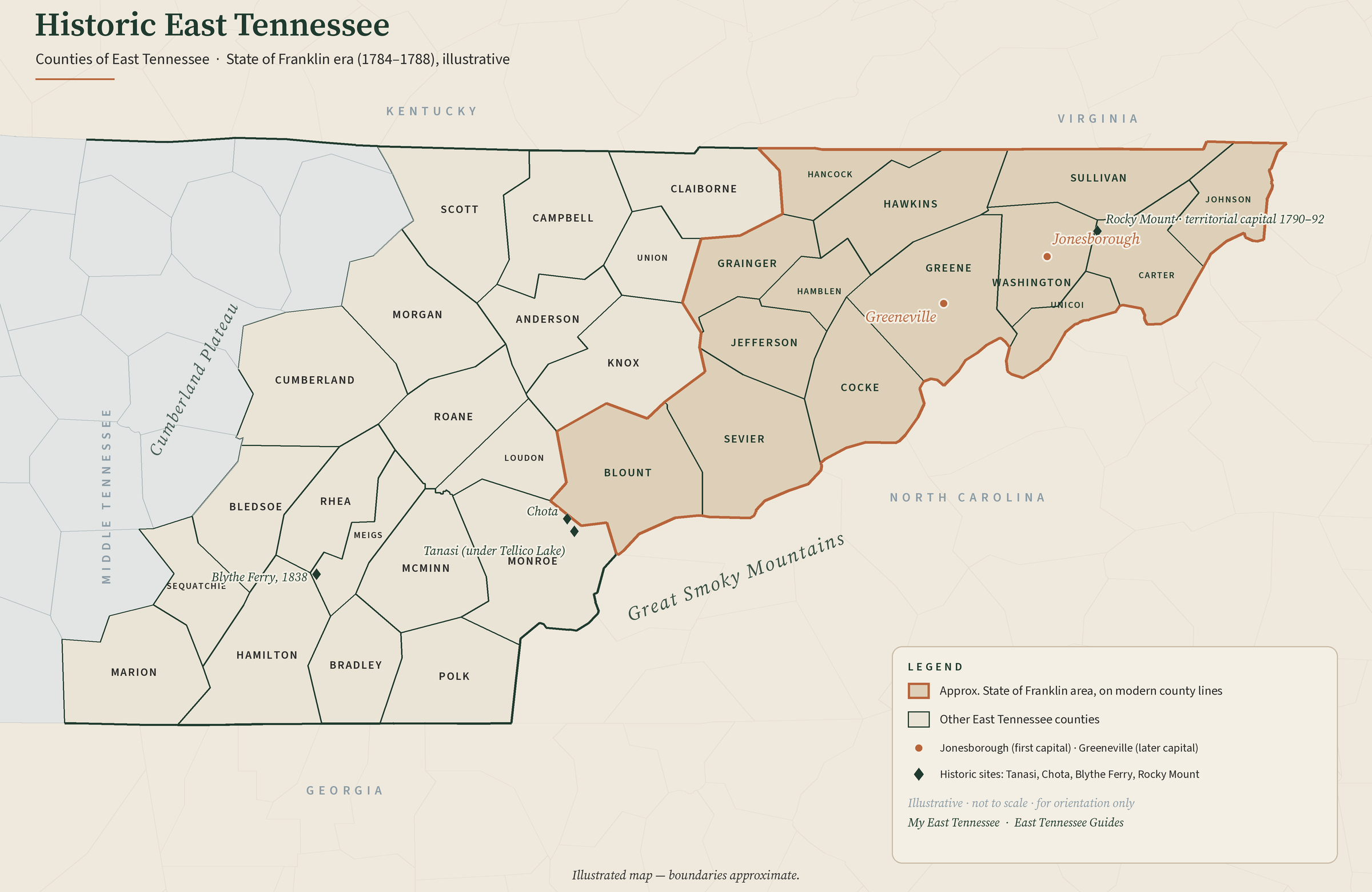
Franklin on the map
Videos
Sources
Checked Oct 27, 2026 · We summarize; follow these for the full history. No hours or fees on this page — check official sites before you go.