- In 1933 only about 3 in 100 Tennessee Valley farms had electricity. TVA was created that May to change that. ⓘ TVA
- Norris Dam, TVA’s first, went up on the Clinch River from 1933 to 1936. ⓘ TVA
- In September 1942 the Army picked the ridges downstream for the Manhattan Project. TVA power and Clinch River water were part of why. ⓘ NPS ⓘ TVA
- Oak Ridge went from farm country to over 75,000 people by the end of the war. ⓘ NPS
- Today you can visit the K-25 site, ride the DOE bus tour behind the fence (seasonal; register early), and finish the day at Norris Dam.
1. A valley in the dark (1933)
When Franklin Roosevelt signed the Tennessee Valley Authority Act on May 18, 1933, the Valley was among the hardest-hit places in a country flattened by the Great Depression. By TVA’s own numbers, personal income in the region was about 45% of the national average, nearly two-thirds of residents farmed, and only 3% of those farms had electricity. Even fewer had running water. The land was worn out by erosion and wildfire, and the river flooded year after year. ⓘ TVA testimony ⓘ TVA
On a ridge farm in Anderson or Union County, nightfall meant kerosene lamps. Wash water was heated on a wood stove, and food was kept in a springhouse or cellar. The TVA Act gave the new agency a big job: control floods, make the river navigable, replant worn-out land, and drive “the agricultural and industrial development of said valley.” Cheap public power tied all of it together.
2. Norris Dam: the first one (1933–1936)
Work on what was first called Cove Creek Dam started October 1, 1933 on the east bank of the Clinch River. TVA’s board renamed it for Senator George Norris of Nebraska, who had pushed for public power on the Tennessee River for years and wrote the TVA legislation. The gates closed in 1936, and by that summer the first generator was turning. ⓘ ETSU Archives ⓘ TVA
- 265 feet high and 1,860 feet across the Clinch. ⓘ TVA
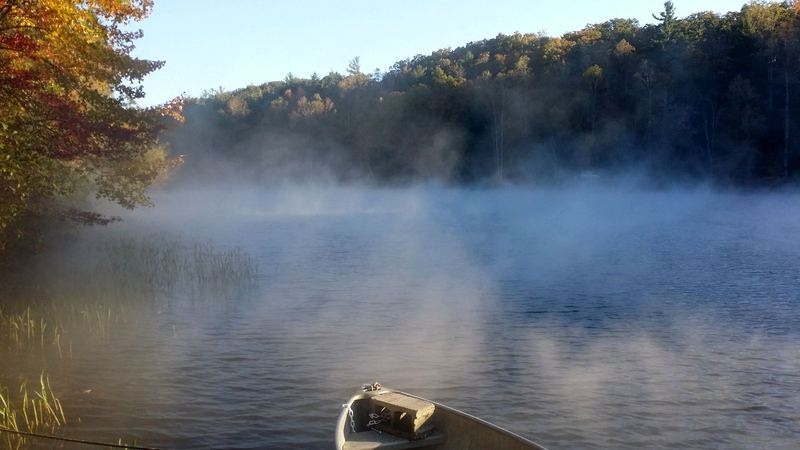
- The lake behind it runs 73 miles up the Clinch and 56 miles up the Powell, with 809 miles of shoreline — the largest reservoir on any Tennessee River tributary. ⓘ TVA
- TVA built the town of Norris to house the dam workers, as a planned model community. It was sold to private owners in 1948. ⓘ TVA
The cost to the people who lived there. The Norris project took about 152,000 acres across Union, Campbell, Grainger, Anderson and Claiborne counties. Per the dam’s National Register nomination, about 3,500 families were affected, and roughly 2,500 of them relocated within that five-county area. Union County took the hardest hit. The community of Loyston went under the lake entirely, and graves were moved by the thousands. These were the poor Appalachian families the New Deal set out to help, and many of them lost home places their families had worked for generations. Both halves of that story are true, and a good guide tells both. ⓘ NPS / NRHP ⓘ Wikipedia
What the power did. Lights came across the countryside: electric pumps, refrigerators, hot-water heaters, and rates low enough that people stopped being scared of the meter. By the end of the 1950s, TVA reported that more than 95% of Valley farms had electricity. ⓘ NYT 1959 ⓘ FDR Foundation
Go see it: Norris Lake & Norris Dam → · Anderson County history →
3. Power for a war nobody could talk about
TVA saw it coming early. In 1935, Chairman Arthur Morgan told Congress that “an adequate supply of electric energy comes pretty close to being a matter of national defense.” By 1941 TVA was running one of the largest hydropower construction programs the country had ever seen. Cherokee Dam went up in 16 months, a year ahead of schedule, and Douglas Dam in 12 months and 17 days, mostly to feed Alcoa’s aluminum plant south of Knoxville, then the largest in the world. Warplanes were built from that aluminum. ⓘ TVA
Then came a second big customer — the one TVA says “came to the region, in large part, because TVA was already here.” ⓘ TVA
4. Why the Army picked these ridges (September 1942)
On September 19, 1942, two days after he took charge of the Manhattan Project, Gen. Leslie Groves approved a stretch of valleys and ridges about 20 miles west of Knoxville. The government’s own histories give the reasons: ⓘ NPS ⓘ NPS
| What the Army needed | What East Tennessee had | Source |
|---|---|---|
| Huge amounts of electricity | TVA’s hydro dams, including Norris, 16 miles upstream | NPS, TVA |
| Lots of cooling water that wouldn’t flood | The Clinch River, controlled by Norris Dam | TVA |
| Room, about 60,000 acres | Sparse farm country, about 1,000 families | NPS, AHF/Wilcox |
| Workers | Depression-era labor; Knoxville close by | NPS |
| Rail | Existing lines; only a short spur needed | NPS |
| Safety & secrecy | Parallel ridges kept each plant and the town in its own valley, far from the coast | NPS, AHF/Wilcox |
Sites in Washington State were turned down partly because of “too much work … to install power lines for the immense energy needed.” ⓘ NPS Power wasn’t the only reason the Army chose Oak Ridge, but it was a big one — and it’s the thread that ties the TVA story to the Secret City story.
How much power? Gen. Kenneth Nichols, the Manhattan District Engineer, is quoted as saying Oak Ridge used one-seventh of all the electricity produced in the United States from 1943 to 1945. ⓘ NPS wayside TVA says that for three years the plant used “millions of kilowatts of TVA energy for something not even the Chairman of TVA knew about.” ⓘ TVA
5. The Secret City: Y-12, K-25, X-10 (and S-50)
The site was first called the Kingston Demolition Range and then the Clinton Engineer Works, after the nearest good-sized town. Farms and hamlets like Wheat made way for fences, guard towers and buses. Oak Ridge had been planned for 13,000 people; it passed 75,000 by the end of the war. By summer 1943 it was also the Manhattan Project’s administrative headquarters. ⓘ NPS
- Y-12Electromagnetic separation using Ernest Lawrence’s “calutrons,” oval “racetracks” of giant magnets. Construction began February 18, 1943, and at its peak the plant had 22,000 workers. Many operators were young local women just out of high school — the “Calutron Girls” — and none of them knew what they were making. Y-12 uranium went into Little Boy. ⓘ NPS
- K-25The gaseous diffusion plant: a U-shaped building half a mile long and 1,000 feet wide on 44 acres, the largest building in the world at the time. It ran gas through more than 3,000 stages and enriched uranium more cheaply than any other method. It ran until 1964 and was demolished in 2013. K-25 sits on the Roane County side of Oak Ridge. ⓘ NPS ⓘ TN TEMA
- X-10The Graphite Reactor, the first reactor built after Chicago Pile-1. From 1943 to 1945 it made about 326 grams of plutonium for Los Alamos, which helped shape bomb design. It operated until 1963. ⓘ NPS
- S-50A liquid thermal diffusion plant, the third enrichment method. ⓘ NPS
On August 6, 1945, Little Boy, fueled with Oak Ridge uranium, was dropped on Hiroshima. Nagasaki followed on August 9, and Japan surrendered on August 14. People in Oak Ridge learned what they had been building from the radio, the same as everyone else. NPS notes that more than 200,000 people had died from the two bombings by the end of 1945, and the museums here tell that side too. ⓘ NPS
More on the city itself: Oak Ridge: inside the Secret City →
6. What a first-timer can visit today
Hours, fees and tour seasons change. Use the official links; we don’t list prices here. Checked Oct 27, 2026.
- Manhattan Project National Historical Park, Oak Ridge Visitor Center — inside the Children’s Museum of Oak Ridge: rangers, the park film, passport stamp and junior ranger books. NPS visitor center ↗
- DOE public bus tour “behind the fence” — leaves from the American Museum of Science & Energy. It’s seasonal and you must register; U.S. citizens age 10+ with valid photo ID only, lots of walking, early check-in. Stops vary by date (the X-10 reactor only on special dates). AMSE bus tours ↗ · NPS tour overview ↗
- American Museum of Science & Energy (AMSE) — opened in 1949; it calls itself the nation’s oldest museum of science and energy. AMSE plan your visit ↗
- Atomic History Campus at K-25 (K-25 History Center) — stand where the world’s largest building stood. K-25 visit page ↗
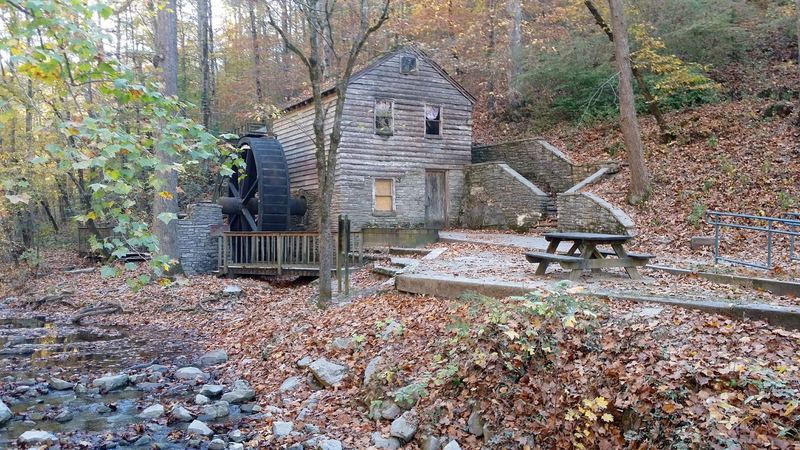
- Norris Dam State Park — the first TVA dam, plus the Lenoir Museum, Rice Grist Mill and Crosby Threshing Barn. TN State Parks ↗
- Museum of Appalachia (Clinton/Norris) — the mountain life that was there before the dams and the fences. Museum of Appalachia ↗
- Norris Dam itself — TVA lists it off Hwy 441 at 30 Powerhouse Way, Norris. TVA Norris ↗
Norris Dam and the grist mill in the morning → Museum of Appalachia → Oak Ridge in the afternoon for the NPS visitor center and K-25. Or build the day around a bus-tour morning (register ahead) and hit Norris after.
Frontier history on the same drive: Fort Southwest Point at Kingston — see Roane County →
7. Watch
8. Prints from TVA & history country
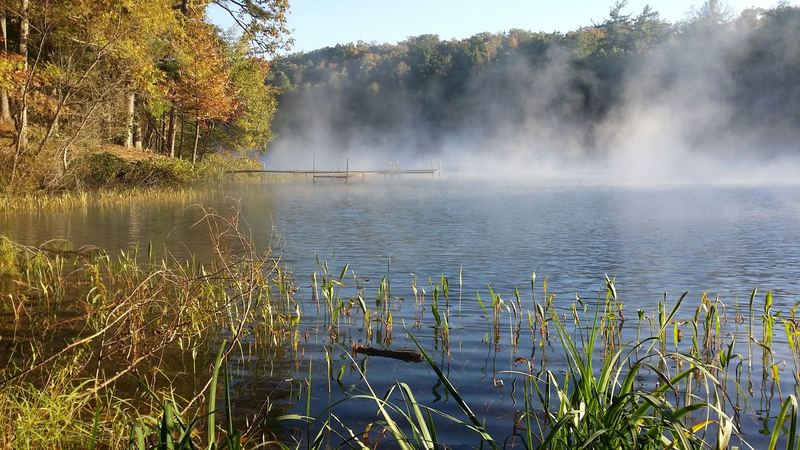
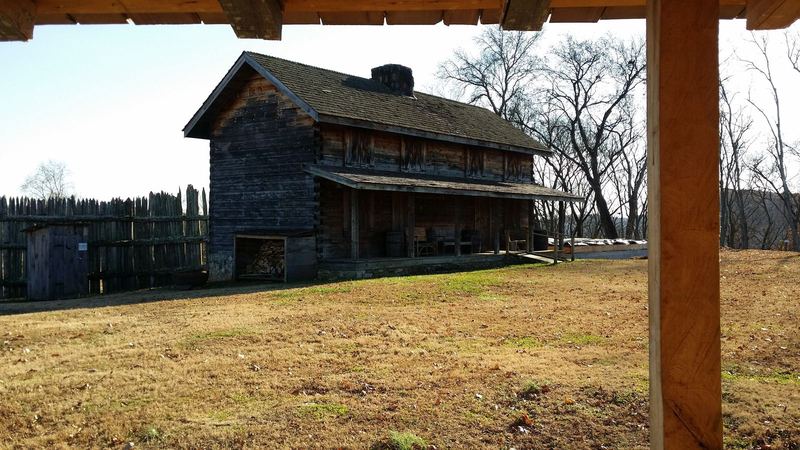
From our shop — prints, canvas & framed versions through Fine Art America. See all East TN prints →
FAQ
Why Oak Ridge?
Power from TVA dams, cooling water from the Clinch, room, rail, workers, and ridges that hid and separated the plants. ⓘ NPS ⓘ TVA
Can I see Y-12 or X-10 on my own?
No. Those sites are on secure DOE land and open only through the DOE public bus tour. The K-25 history sites are the exception. ⓘ NPS
Is it good for kids?
The DOE bus tour is for ages 10 and up. The K-25 History Center and AMSE are family-friendly. ⓘ AMSE ⓘ K-25
How far is it from Knoxville?
The Manhattan Project site sits about 20 miles west of Knoxville. ⓘ NPS
Sources
Checked Oct 27, 2026 · We summarize; follow these for the full history. No hours or fees on this page.
- TVA — Our History ↗
- TVA — Powering World War II ↗
- TVA — Norris Dam ↗
- TVA CEO testimony to Congress, 2021 (1933 income & farm electricity) ↗
- NPS — National Register nomination, Norris Hydroelectric Project ↗
- ETSU Archives — Norris Dam construction ↗
- FDR Foundation — Lights Across the Countryside ↗
- New York Times archive, Dec 13, 1959 — TVA farm service ↗
- Wikipedia — Norris Dam (Loyston, relocations) ↗
- NPS — Manhattan Project site selection ↗
- NPS — Geography of Oak Ridge ↗
- NPS — Powering the Manhattan Project (wayside) ↗
- NPS — Manhattan Project science at Oak Ridge ↗
- NPS — About Oak Ridge ↗
- NPS — K-25 Gaseous Diffusion Plant ↗
- Atomic Heritage Foundation — Bill Wilcox oral history (2005) ↗
- Tennessee TEMA — About the Oak Ridge Reservation ↗